• Skip to primary navigation
  • Skip to main content
  • Skip to footer

Teaching in Higher Ed

  • Podcast
  • Blog
  • SPEAKING
  • Media
  • Recommendations
  • About
  • Contact

Personal knowledge mastery

Network Weaving as an Antidote to Imposter Syndrome

By Bonni Stachowiak | November 8, 2025 | | XFacebookLinkedInEmail

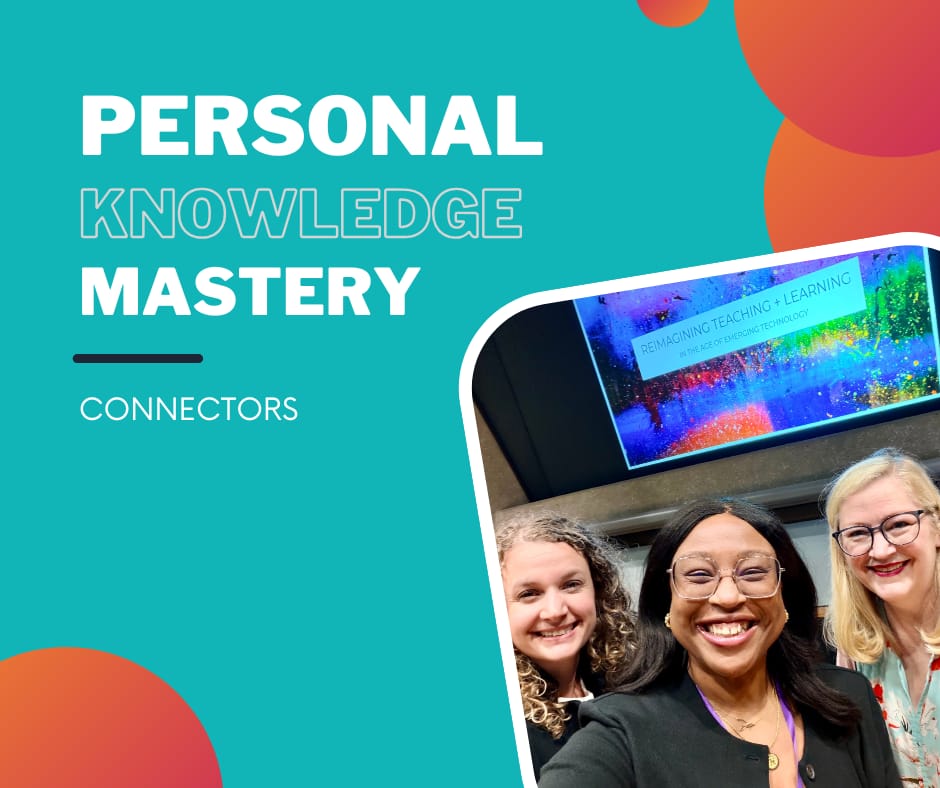
Personal Knowledge Mastery: Connectors

Three women stand in the front of a room in a large lecture hall.

I've been traveling this week, so got a bit behind on my reflections on Harold Jarche's Personal Knowledge Mastery (PKM) workshop. The other thing that is a bit frustrating, is that I haven't been disciplined about my typical sensemaking habits and practices and seem to have lost the notes I took on a video he shared about something new to me: network weaving. At some point, maybe my reflections will resurface (my digital inboxes are overflowing, at the moment, and search seems no use to me if I can't even find the haystack that the needle may be hiding in with those notes). That's all just to say, I'm all over the place right now.

Network Weaving

I stubbornly don't want to rewatch the video at this exact moment. I'm sitting in an airport, next to an outlet with all my devices happily charging until it is time to get on my first of two flights for the day. To say that I am a person with battery anxiety is an understatement. Here's what I remember about watching Networks: Weaving People, Ideas and Projects, though, mixed with the connections I found with other ideas I've encountered in the past.

June Holley describes network weaving as connecting people, ideas, and projects. Hearing her describe the generosity and intentionality involved in network weaving had me reflecting on Coaching for Leaders Episode 279 with Tom Henschel: How to Grow Your Professional Network. Prior to listening to that conversation between Dave and Tom, I had thought about networking more as something I was never very good at, but tolerated, since I knew it was necessary in most professions.

Tom described different types of networking and it was then that I realized I actually loved it and did it all the time; just that I hadn't thought of what I enjoy doing falling under the category of networking. I enjoy meeting someone new and then identifying who else I know that is into the same stuff that they're into. I think what Tom was describing is a lot like June Holley's description of network weaving. Jarche shares this short Network Weaving 101 article from Valdis Krebs, which describes how this process is all about “closing triangles.” Krebs writes:

A triangle exists between three people in a social network. An “open triangle” exists where one person knows two other people who are not yet connected to each other — X knows Y and X knows Z, but Y and Z do not know each other. A network weaver (X) may see an opportunity or possibility from making a connection between two currently unconnected people (Y and Z). A “closed triangle” exists when all three people know each other: X-Y, X-Z, Y-Z.

This makes so much sense to me, instantly. Some of the other content that Jarche has shared has been challenging for me to take in (which I appreciate, as he's stretching me and helping me grow). But this one, I feel like I get on a more instinctive level. Like I've been doing something for much of my life, without having a word for it, yet experiencing such joy each time it happens.

Imposter Syndrome

I'm also realizing that one of the ways I try to calm my nerves when preparing to do a keynote or workshop may very well be embodied by the idea of network weaving. The lizard part of my brain starts to tell myself that I have nothing to offer (this gets exasperated by being in a hotel room in an unfamiliar city, after sitting too long on airplanes all day). One of the best listener emails I ever received came from Itamar Kastner in Scotland. He said that he knows I'm a fan of music and thought I might enjoy Grace Petrie, and English Folk singer-song writer “in the protest singer tradition of Billy Bragg and Woody Guthrie,” he explained over email. Yes, indeed, Itamar was spot on in recommending Grace Petrie's Nobody Knows That I'm a Fraud:

To thwart the less sophisticated parts of my brain that make me wonder what I'm doing in a hotel room, preparing for the next day's adventures, I work to shift my focus away from how I am feeling and what I might like people to experience in the session with me. I even try to shrink it down more than a bunch of nameless faces and think about a single person and where they may be struggling and potentially feeling alone or like a failure in some way. What sorts of imposter syndrome symptoms might otherwise be relieved through my vulnerability in not having everything figured out, yet learning out loud, anyway? How might that posture provide fertile ground for others to do the same?

The second half of how I can calm my nerves is to remember that my job isn't to talk about what I do in my own teaching, necessarily. Rather, I get to share these incredible stories and point people back to the source of inspiration that I've found through the podcast across all these years. This feels very much like what I now understand to be a form of collective network weaving (as in connecting many people to new ideas, people, and projects. The last eleven and a half years, I've been fortunate to get to talk to people from all over the world who love teaching and learning (just like me). The stories within those conversations are limitless sources of hope, practice, and feelings of solidarity.

Jackie Shay offers the final piece of the puzzle for unraveling those feelings of insecurity that can be present for so many of us, by the way. I realize that last sentence mixed at least two metaphors at once, but give me a break. I'm sitting in an airport, remember? 😂 On Episode 571: Overcoming Imposter Syndrome Through Joyful Curiosity, Jackie asks:

Why can't we recognize that these different types of intelligences have just as much value as intellectual intelligence?

I'm not supposed to ever be even close to the smartest person in the room. Not even close. But curiosity and connection? Those are two pursuits I've enjoyed my whole life and are forms of intelligence to be valued and cultivated in ourselves and others. As we prepare to share our sensemaking process with others, how about we stop trying to out-perform the imaginary room of intelligent people we'll be talking at and start working on creating conversations that spark imagination?

Jackie Shay is tremendously good at getting people curious and engaged. I remember so vividly talking to Jackie about my memories of camping with my family in Joshua Tree as a little girl and getting swept away in all the specifics that flooded into my mind. Then, I felt like I should pull back and joked about revealing a bigger focus on capitalism than I had hoped for a conversation about nature/science. My brother and I used to have a whole economy we had built out of the various elements in the desert back then, like the quartz crystals and different types of plants.

Jackie laughed with me, but also let me know that sorting and categorizing things (as we had done with the different elements there in the desert) was actually a big part of science. We were doing science, even though I didn't have a word for that at the time (and clearly didn't in my embarrassment feeling like no one wanted to hear about my childhood memories until she pointed out to me that we had been doing science, without realizing it). I recalled Alexis Pierce Caudell recommending Categories We Live By: How We Classify Everyone and Everything, by Gregory L. Murphy on Episode 527. While I wish I had finished reading it by now, but it sits in the virtual pile of books I've started but have yet to complete. It's not a science book, though, well… except maybe the varieties related to library science and information technology. I obviously need to read the book before I should be commenting on what it is and isn't. Sigh.
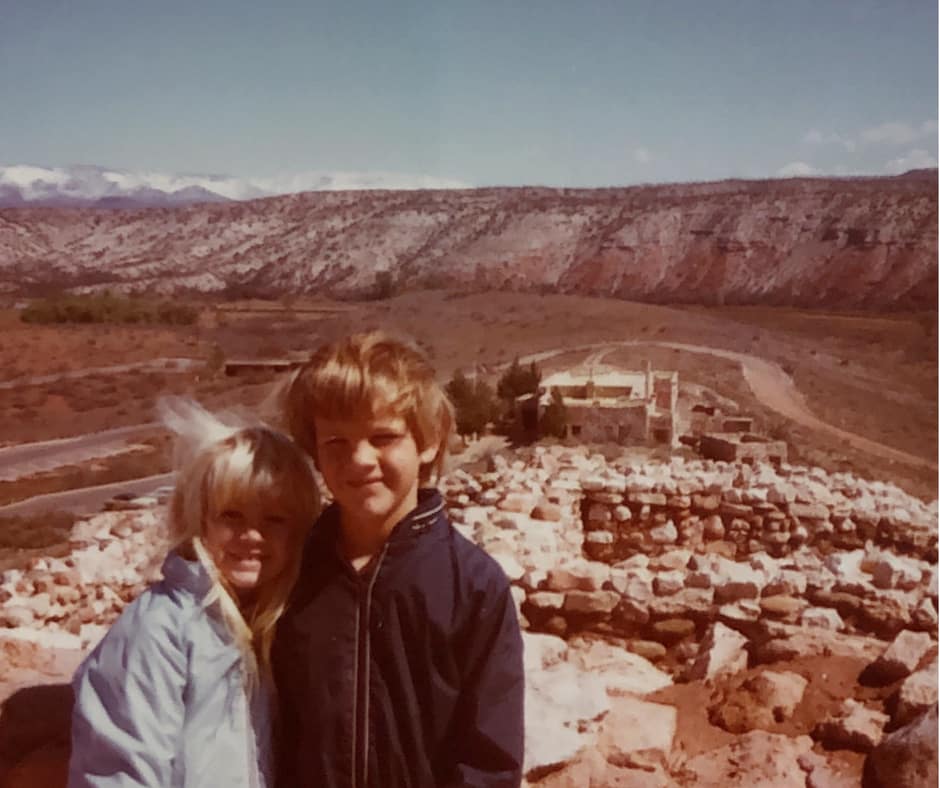
Two young kids about the age of six and eight stand in front of hills in the background and stone structures in the foreground. The stones make up the shape of walls and other structures.

I don't think at all that this picture of my brother and I was actually taken in Joshua Tree. I'm going to have to see if I can find one in the photo albums I haven't quite gotten to scanning yet. But it reminds me of our imaginative life that we had when our family would take trips together.

Closing Triangles

As Valdis Krebs described, network weaving is all about closing triangles. At the keynote I gave for the ETOM conference today, I didn't exactly close a triangle. However, I got to spend some time with a couple of past Teaching in Higher Ed podcast guests. Christina Moore discussed Inclusive Practices Through Digital Accessibility on Episode 293 and Mobile-Mindful Teaching and Learning on Episode 456. VaNessa Thompson helped us discover How to Engage on Social Media on Episode 416.
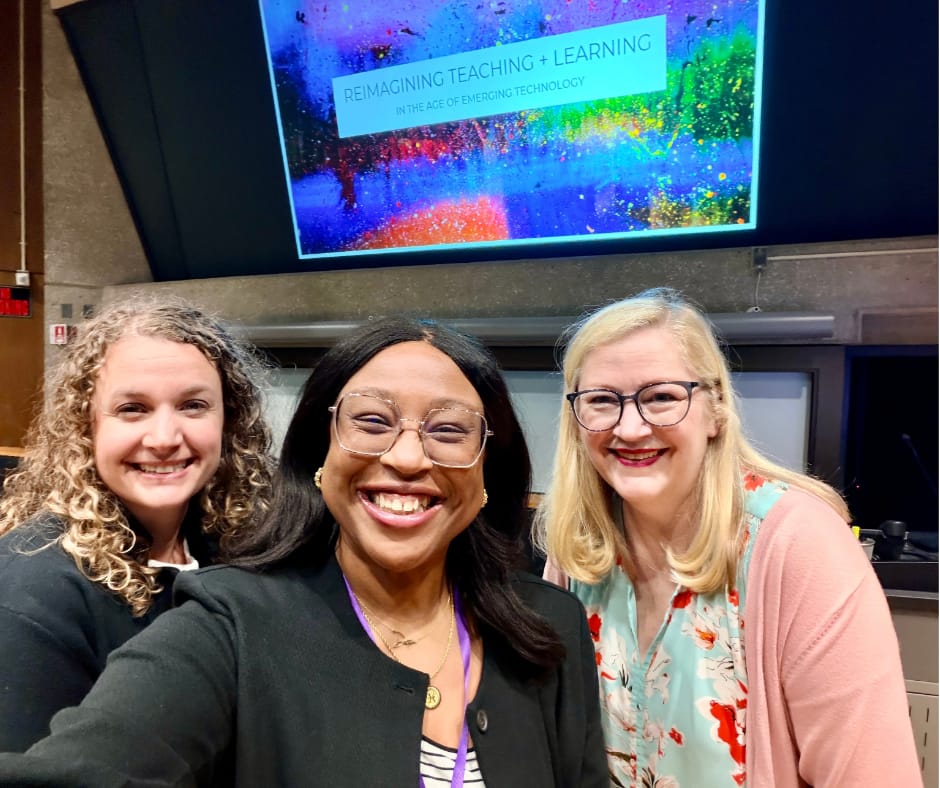
Three women stand at the front of a large lecture hall in front of a colorful presentation slide

VaNessa and Christina already know each other and I know them. Still, this memory we now share tightens the bond between us and now creates a triangular relationship between the three of us. Again, not necessarily closing triangles here. But certainly doing something new with going from one-on-one relationships and now having this shared triangle to remember and potentially strengthen in the future.


PS. My talk was aligned with the conference theme (innovation). I had some fun with alliteration and divided the talk into: 1) innovation 2) imagination and 3) imitation (which was kinda like curation, but I just couldn't break the alliteration streak I was on there). In my reading for the topic of connectors, I just saw a quick reference in Beth Kanter's piece that Jarche shared about how helpful network weaving can be when we're “stumbling through the fog of innovation.” I like that phrase “fog of innovation” and only wish I had come across it before today's keynote. 🤦‍♀️🫠

Filed Under: Personal knowledge mastery

The Experts in My Neighborhood

By Bonni Stachowiak | October 30, 2025 | | XFacebookLinkedInEmail

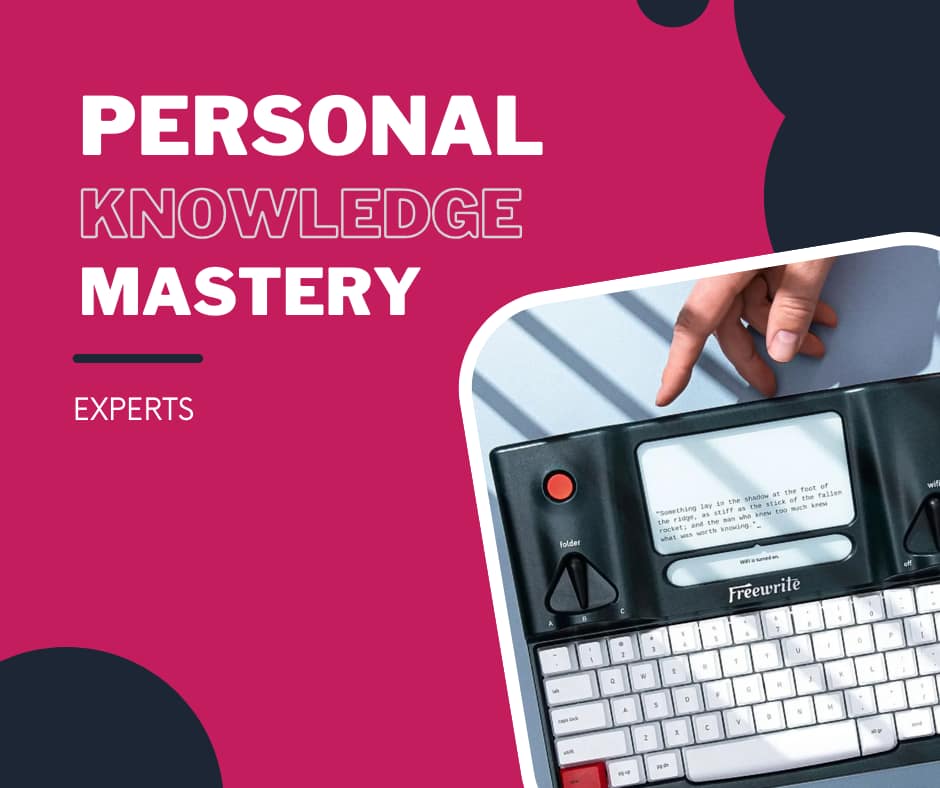
Personal Knowledge Mastery: Experts. 

Electric typewriter with a hand pointing at it.

This post is one of many, related to my participation in  Harold Jarche's Personal Knowledge Mastery workshop.

The topic of how expertise is no longer valued today is often discussed. I realize that I am walking through well-trodden pathways, as I bring it up in these reflections on experts today. In The Death of Expertise: The Campaign Against Established Knowledge and Why it Matters, Tom Nichols writes:

These are dangerous times. Never have so many people had access to so much knowledge, and yet been so resistant to learning anything.

In today's post, I want to think less about the societal and educational concerns I have about the death of expertise and more about how I might continue to attempt to inculcate habits that can keep me from dying that same death, myself. Part of that practice involves finding and curating many experts to help shape my thinking, over time.

PKM Roles from Harold Jarche

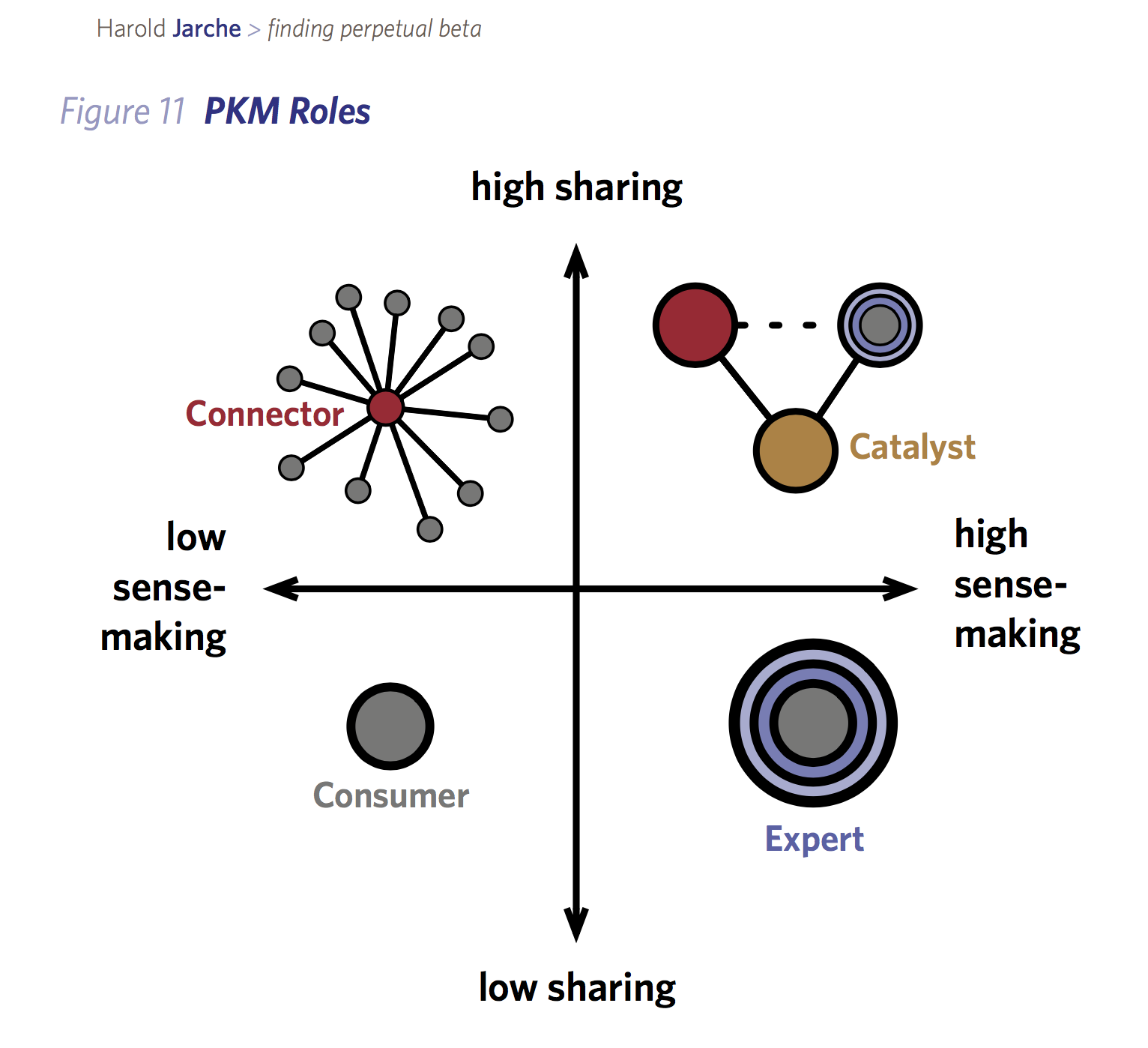
For this topic, Jarche invites us to use a map of personal knowledge mastery (PKM) roles to determine where we currently reside and where we would like to go, in terms of our PKM practice. He offers this graphic as part of his Finding Perpetual Beta book:

On the Y axis, we can sort ourselves into doing high or low amounts of sharing. As I wrote previously, my likelihood of sharing is in direct relation to the topic I'm exploring. However, as Jarche recommended social bookmarking as one way of sharing, perhaps I was selling myself short when I categorized myself as not likely to share anything overly controversial. I have over 35 thousand digital bookmarks on Raindrop.io and add around 10-20 daily. However, I'm more likely to be categorized as highly visible sharing in terms of the Teaching in Higher Ed podcast and the topics I write about on the Teaching in Higher Ed blog.

On the X axis, our activities are plotted on a continuum more toward high or low sense-making. A prior workshop participant of Jarche's wrote:

We must make SENSE of everything we find, and that includes prioritising–recognising what is useful now, what will be useful later, and what may not be useful.

Given my propensity for saving gazillions of bookmarks and carefully tagging them for future use, combined with my streak of weekly podcast episodes airing since June of 2014, when it comes to teaching and learning, I'm doing a lot of sense-making on the regular.

These are the (NEW) Experts in My Neighborhood

Taking inspiration from Sesame Street's People in Your Neighborhood and from Jarche's activity related to experts, I offer the following notes on experts. When I searched for people within teaching and learning on Mastodon, I found that I was already following a lot of them. I decided to then look at who people I already follow are following:

  • Ethan Zuckerman – UMass Amherst, Global Voices, Berkman Klein Center. Formerly MIT Media Lab, Geekcorps, Tripod.com
  • Sarah T. Roberts, Ph.D. – Professor, researcher, writer, teacher. I care about content moderation, digital labor, the state of the world. I like animals and synthesizers and games. On the internet since 1993. Mac user since they came out. I like old computers and OSes. I love cooking. Siouxsie is my queen.
    • I was intrigued by her having written a content moderation book called Behind the Screen. I know enough about content moderation to know that I know pretty much nothing about content moderation.
    • She hasn't posted in a long while, so I'm not sure how much I'll regularly have ongoing opportunities to see what she's currently exploring or otherwise working on

Other Things I Noticed

As I was exploring who people I follow are connected with on Mastodon, I noticed that you can have multiple pinned posts, unlike other social media I've used. Many people have an introduction post pinned to the top of their posts, yet also have other things they want to have front and center. One big advantage to Bluesky to me has been the prevalence of starter packs. The main Mastodon account mentioned an upcoming feature involving “packs” around twenty days ago, but said that they're not sure what they'll call the feature.

Sometimes, scrolling through social media can be depressing. I decided that the next time I'm getting down on Mastodon, I should just check out what's happening on the compostodon hashtag. It may be the most hopeful hashtag ever.

The Biggest Delight From the Experience

Another person who was new to me as an expert on Mastodon was JA Westenberg. According to JA Westenberg's bio, Joan is a tech writer, angel investor, CMO, Founder. A succinct goal is also included on the about page of JoanWestenberg.com:

My goal: to think in public.

As I was winding down my time doing some sensemaking related to experts, I came across a video from Westenberg that was eerily similar to what Jarche has been stressing about us making PKM a practice. I can't retrace my steps for how I came across Joan's video on Mastodon, but a video thumbnail quickly caught my eye. Why You Should Write Every Day (Even if You're Not a Writer) captured my imagination immediately, as I started watching. In addition to the video, there's a written article of the same title posted, as well.

As I continue to pursue learning through the PKM workshop, I'm blogging more frequently than I may ever have (at least in the last decade for sure). Reading through Joan's reactions to the excuses we make when we don't commit to writing resonate hard. We think we don't have time. How about realizing we're not writing War and Peace, Joan teases, gently. Too many of us get the stinking thinking that we don't have anything good to say or that this comes naturally to people who are more talented and articulate than we are. Joan writes:

Writing every day is less about becoming someone who writes, and more about becoming someone who thinks.

Before I conclude this post, I want to be sure to stress the importance I'm gleaning of not thinking of individual experts as the way to practice PKM. Rather, it is through engaging with a community of experts that we will experience the deepest learning. A.J. Jacobs stresses that we should heed his advice:

Thou shalt pay heed to experts (plural) but be skeptical of any one expert (singular)

By cultivating many experts whose potential disagreements may help us cultivate a more nuanced perspective on complex topics. When we seek to learn in the complex domain, the importance of intentionality, intellectual humility, and curiosity becomes even more crucial. Having access to a network of experts helps us navigate complexity more effectively.

Filed Under: Personal knowledge mastery

From Half-Baked to Well-Done: Building a Sensemaking Practice

By Bonni Stachowiak | October 28, 2025 | | XFacebookLinkedInEmail

Personal Knowledge Mastery: Half Baked Ideas Hand drawn image of a light bulb surrounded by colorful buildings, water, sky, etc.

This post is one of many, related to my participation in  Harold Jarche's Personal Knowledge Mastery workshop.

Making Sense through Sensemaking

Sensemaking is an essential part of one's personal knowledge mastery, so vital that it ought to be a regular practice for any human, particularly those who desire to be taken seriously and be able to add value in workplaces, communities, and societies. Sensemaking centers on a desire to solve problems and gets fueled by curiosity.

Jarche shares that there's a whole spectrum of potential sensemaking approaches, everything from filtering information (making a list), or contributing to new information (writing a thesis). Sensemaking requires practice and vulnerability. We aren't always going to get things right the first time we come to a conclusion.

Half-Baked Ideas

In introducing the idea of “half-baked ideas,” Jarche writes:

If you don’t make sense of the world for yourself, then you’re stuck with someone else’s world view.

As I reflect on my own ability to come up with half-baked ideas, it all depends on how controversial whatever idea I might be having at the time is as to whether I'm inclined to share it in a social space. I find myself thinking about what hashtags or even words might attract people looking for an internet fight, or wanting to troll a stranger.

If a half-baked idea I might share is related to teaching and learning, I am less concerned about who may desire to publicly disagree with something, but it it is about politics, I just don't see the value in “thinking aloud,” in relation to what internet riff raff may decide to come at me, metaphorically speaking. Part of that is that I'm not an expert, while another aspect of this resistance is that I would rather do this kind of sensemaking offline. This is at least in terms of me trying out ideas about various policies, political candidates, and issues of the day.

Committing to Practice

I just launched a sensemaking practice involving books about teaching and learning. Usually, I read upwards of 95% of the authors' books that I interview for the Teaching in Higher Ed podcast. However, I would like to both find other ways to surface my own learning from all that reading, along with cultivating a set of skills to get better at video.

The series is called Between the Lines: Books that Shape Teaching and Learning and I anticipate eventually getting up to producing an average of one video per week. I won't hold myself to quite as high of expectations as I do for the podcast, since for that, I've been going strong, airing a podcast every single week since June 2014 and I don't want to have that kind of self-imposed pressure for this experimentation, skill-building, and sensemaking practice.

The first video is about how small shifts in our teaching make college more equitable and explores three key ideas from David Gooblar’s book, One Classroom at a Time: How Better Teaching Can Make College More Equitable. I hope you'll consider watching it and giving me some encouragement to keep going or suggestions for how to make them more effective.

Filed Under: Personal knowledge mastery

Fake News Brings Me to an Unusual Topic for this Blog

By Bonni Stachowiak | October 26, 2025 | | XFacebookLinkedInEmail

Personal Knowledge Mastery : Fake News Picture with a bunch of newspapers

This post is one of many, related to my participation in  Harold Jarche's Personal Knowledge Mastery workshop.

The topic for this lesson is fake news. Jarche instructs us that there are four primary types of fake news and he asks us to find an example of each type. I don't normally post overtly political content here on my blog, but when it comes to the topic of fake news, it seemed easier to focus on politics than teaching and learning.

The closest I could come off the top of my head in my normal topics was the Dead Ideas in Teaching and Learning podcast, and the many podcasts I've done about grading and assessment. But I'm still going to stick with politics for now. Stop reading if you aren't prepared to read examples of the current US presidential administration lying.

Four Types of Fake News

  1. Propaganda – Ideas, facts, or allegations spread deliberately to further one's cause or to damage an opposing cause.” – Merriam WebsterExample – Snopes shares 12 times AI generated or doctored content was shared by Trump or the White House. These examples seem to fit under propaganda, since they attempt to influencing people's attitudes and beliefs. Though that also sounds like disinformation to me and I'm still not clear I know the difference.
  2. Disinformation – “False information deliberately and often covertly spread (as by the planting of rumors) in order to influence public opinion or obscure the truth.” – Merriam WebsterExample – Trump states that there is no inflation in the US. There are some who say that Trump's specific type of lying falls under the category of bullshit, as defined by Harry Frankfurt in his book, On Bullshit. Either way, it feels like shooting fish in a barrel to find examples of disinformation from this administration.
  3. Conspiracy theory – “Persist for a long time even when there is no decisive evidence for them… Based on a variety of thinking patterns that are known to be unreliable tools for tracking reality.” – The Conspiracy Theory Handbook, by Lewandowski + CookExample – Ok. So this isn't a genuine conspiracy, rather it was satirical from the start. But given how I feel after finding those examples of propaganda and disinformation, I needed a little break. The “birds aren't real” satirical conspiracy scratches a certain itch for me, as someone who enjoys learning about birds.
  4. Clickbait – “Text or a thumbnail that is designed to attract attention and to entice users to follow (“click”) that link and view, read, stream or listen to the linked piece of online content, being typically deceptive, sensationalized, or otherwise misleading… A defining characteristic of clickbait is misrepresentation in the enticement presented to the user to manipulate them to click onto a link.” – WikipediaExample – Bryan Tyler Cohen is rather notorious for using clickbait YouTube video titles on his main channel. I saw a video of him explaining that he knows they are frustrating to people, but that they really generate far more views, in his testing. He even created an alternate channel (Bryan Tyler Cohen News) with more toned down titles, which he suggests can be better to send to people who may be on a different side of the issues than him, politically.

My Muddiest Point

I'm having a hard time distinguishing between disinformation and propaganda. Jarche shared a quote from researcher Renée DiResta, who would prefer our focus be on the word propaganda, as it is more descriptive of the problem at hand.

El Pais: The problem is not misinformation

Q. Why do you prefer the word “propaganda” to “misinformation”?

A. Misinformation implies that the problem is one of facts, and it’s never been a problem of facts. It’s a problem of people wanting to receive information that makes them feel comfortable and happy. Anti-vaccine messages don’t appeal to facts, but to the identity of the recipient. They’re saying: “If you are a person on the right, you should not trust these vaccines.” It’s very much tied to political identity. Misinformation implies that if you were to say that Robert F. Kennedy Jr. is an absolute clown who knows absolutely nothing about vaccines or their relationship to autism, and that this has been researched to ad nauseam by scientists, if it were a problem of misinformation, you would assume that people would say, “Oh, here’s the accurate information, so I’m going to change my mind.” But that’s not the case. It’s a topic of identity, of beliefs, and that’s why propaganda is a more appropriate term.

But I'm still not entirely clear I can distinguish propaganda from disinformation at this time.

Handling Conspiracy Theories with Students

I have such a hard time navigating conspiracy theories with students who take business ethics with me. We have a whole section of the class where they learn how to use Mike Caulfield's SIFT framework to fact check the articles they read about business ethics related news stories throughout our semester together. I've found it is practically useless to ask them the question from Mike's mini course about if they or someone they're close to has ever believed in a conspiracy theory before.

There's so much of one's identity that gets wrapped up in what we believe. Generally, they don't view these beliefs as conspiracies if they or their loved ones believe in them.

Filed Under: Personal knowledge mastery

Can You Keep a Secret?

By Bonni Stachowiak | October 21, 2025 | | XFacebookLinkedInEmail

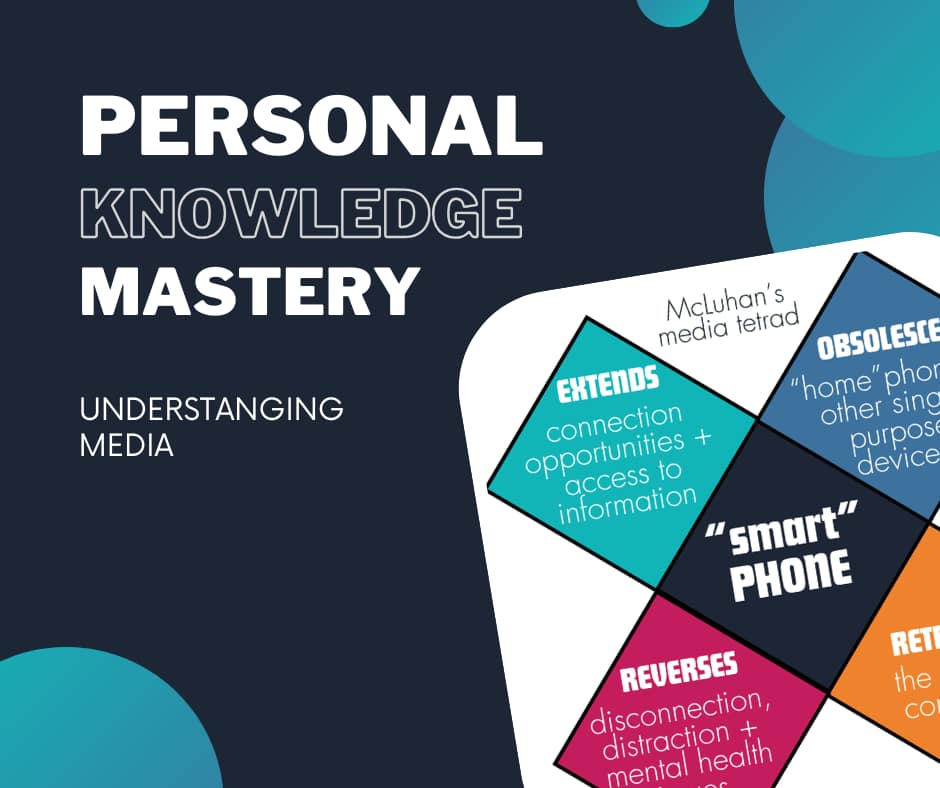
A graphic with the title “Personal Knowledge Mastery” and subtitle “Understanding Media.” On the right side, it shows McLuhan’s media tetrad applied to the “smart” phone. The tetrad diagram includes four diamonds around a center labeled “smart phone.”

This post is one of many, related to my participation in Harold Jarche's Personal Knowledge Mastery Workshop.

The Medium: The “Smart” Phone

Shhhh… Don't tell anyone, but our 13 year-old son will likely be getting his first “smart” phone for Christmas this year. I don't think he has ever read my blog, so we should be good until December. As long as you cooperate with this secret surprise.

I remember reading a few years back that the average child in the United States gets a phone at the age of 11. That seemed really early to me then. By the time Christmas rolls around, he will be about a month away from turning 14, which seems awfully late.

Our son would agree.

He tells us that he and one other guy in school are the only kids without a phone at this point. This may sound like a stereotypical story of woe that young people tell their parents to let them have something. But when we discuss the subject, there's a common theme:

What he really wants is a camera, disguised as a phone.

A primary driver for his wanting the camera and messaging functionality is his upcoming middle school Washington DC trip in the Spring. When I tossed the idea around of getting him a camera, instead, he had no interest in that, though. Dave and I have talked a lot about it and figure this is a good time for him to get a phone and we've started our discussions about how we want to handle that, as parents.

Dave and I talk more about these tensions in the second half of the video we recorded of us unboxing and playing with Justin Shaffer's Alignment: A Course Design Deck.

We also link in the video's notes to the parent resources from The Social Institute, which are recommended by the academic leadership at our kids' school. Now, on to why I'm bringing up smart phones in this particular post.

McLuhan's Media Tetrad

Jarche introduces those of us participating in his Personal Knowledge Mastery Workshop to McLuhan's Media Tetrad this week. I've seen the diagram on Jarche's blog, before, but never slowed myself down enough to spend time soaked in it, like I have today.

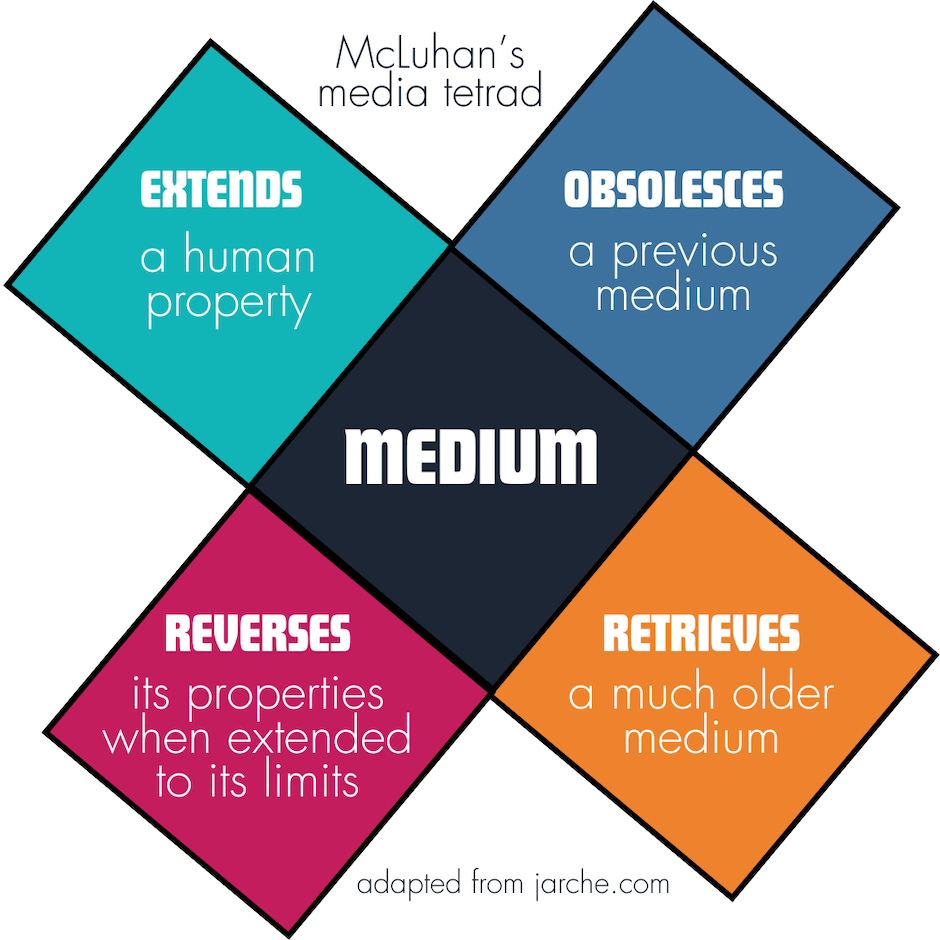
A diamond-shaped diagram illustrating McLuhan’s media tetrad. The center diamond is labeled “Medium.” Four surrounding diamonds describe its effects: the top says “Obsolesces — a previous medium,” the right says “Retrieves — a much older medium,” the bottom says “Reverses — its properties when extended to its limits,” and the left says “Extends — a human property.” The image is adapted from jarche.com


Here's my best, novice's understanding of the framework:

It starts with a new medium.

McLuhan posits through his Laws of Media that every new medium results in four effects. Jarche explains that under McLuhan's laws, each new medium:

Extends a human property,

Obsolesces the previous medium (& makes it a luxury good)

Retrieves a much older medium &

Reverses its properties when pushed to its limits

When we take time to understand what happens with new media, we can put in place steps to negate or minimize the negative effects. Ample examples exist of ways that social media extends humans' voices, while ultimately making healthy, human-to-human conversation obsolete. Then, our more tribal affiliations can kick in (Twitter, anyone?) and we reverse into “populism and demagoguery,” according to Jarche's example.

Jarche writes:

The reversals are already evident — corporate surveillance, online orthodoxy, life as reality TV, constant outrage to sell advertising. The tetrads give us a common framework to start addressing the effects of social media pushed to their limits. Once you see these effects, you cannot un-see them.

My Example

As I mentioned earlier, I've selected the “smart” phone as the medium to analyze.

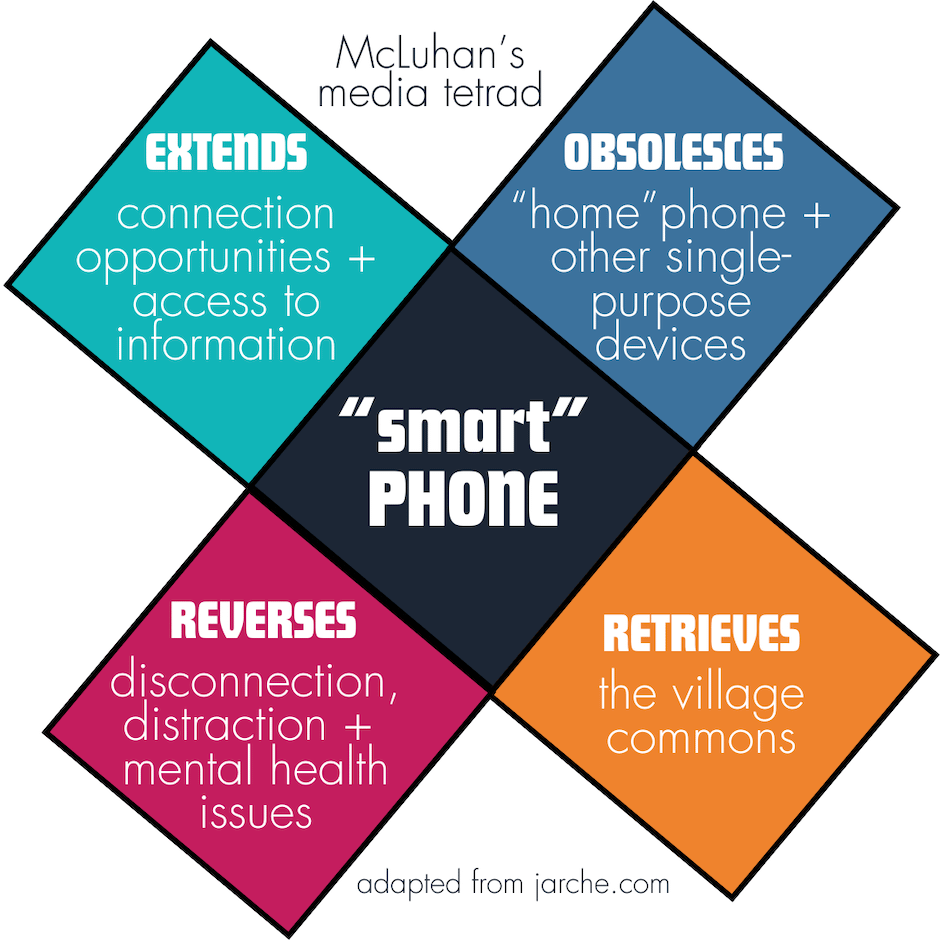
Here's my attempt at the tetrad:

A diamond-shaped diagram showing McLuhan’s media tetrad applied to the “smart” phone. The center diamond says “smart phone.” The four surrounding diamonds explain its effects: top—“Obsolesces: ‘home’ phone and other single-purpose devices”; right—“Retrieves: the village commons”; bottom—“Reverses: disconnection, distraction, and mental health issues”; left—“Extends: connection opportunities and access to information.” The image is labeled “adapted from jarche.com.”

Jarche suggested that we first explore what the technology enhances and then what it obsolesces. That felt easy and hard, simultaneously. Today's “smart” phones contain so many features that the definition of what this technology is can be blurred. Our son, for example, has understandably brought up that when adults raise concerns about phones, they can often be actually talking about social media (which he presently has zero interest in).

The “smart” phone:

  • Extends: connection opportunities and access to information
  • Obsolesces: “home” phone + other single-purpose devices

As Jarche predicted, these two elements of the tetrad were fairly easy to identify (though I could have chosen to go in a bunch of different directions). I can still recall what it felt like to go with my brother to a convenience store that was about two miles from our house and involved climbing down a super steep, dirt hill. The idea that I could have called my Mom to ask her to pick us up, so we could have avoided the steep hill on the way home would not have occurred to me at the time.

That's despite the fact that we watched Star Trek as a family and they had these transporter beams that would transmit the characters in the show from the starship and a planet's surface.


Leonard Nimoy William Shatner Star Trek 1968

The idea of extending our home phone to one that could be carried around in my pocket (if women's pants had pockets, that is…) would have been a welcome idea to me. Then, there are all the other single-purpose devices that the “smart” phone can take the place of, such as:

  • 📞 Landline phone
  • 📷 Camera
  • 🎧 MP3 player
  • 🗺️ GPS
  • ⏰ Alarm clock
  • 📺 Video player
  • 💾 Disk or hard drive
  • 📝 Notepad
  • 🧮 Calculator
  • 💡 Flashlight
  • 💳 Wallet
  • 🧭 Compass
  • ✉️ Mail service

I could have kept going with that list for a long time and just be getting started.

Productive Struggle

Cognitive psychologists talk about how helpful productive struggle can be in the learning process. As Jarche thought we might, I had trouble with what the smart phone might retrieve a much older medium, in terms of the way I had anchored the framework with the other two components (extends and obsolesces). I then moved my focus over to the reverses portion of the tetrad and thought how it was the polar opposite (disconnection) of what it promises to extend (connection).

For the retrieves part, I kept getting stuck between two, broad ideas: the pubic square or the commons.

I considered how the promise of today's phones as the device to connect us with others and with information winds up making loneliness more likely and seeding a potential decline in mental health. I also fixated on how the “extends, obsolesces, and reverses” descriptions I had come up with were more geared toward individuals, yet the promise of the common good is only possible when we come together in community.

I would like to learn more about the history of the public square, as well as regarding the commons in medieval and early modern Europe. I'm also intrigued to keep my learning going regarding “the commons” in digital contexts (Wikipedia, Wikis, Creative Commons, etc.). There are also a lot of places I continue to want to explore about the attention economy and surveillance capitalism.

Until next time, when I share my reflections from Jarche's Fake News lesson. That should be fun, ehh? Nothing going on there in the world, right? 🫠 

Filed Under: Personal knowledge mastery

  • « Go to Previous Page
  • Page 1
  • Page 2
  • Page 3
  • Page 4
  • Page 5
  • Interim pages omitted …
  • Page 13
  • Go to Next Page »

TOOLS

  • Blog
  • Podcast
  • Community
  • Weekly Update

RESOURCES

  • Recommendations
  • EdTech Essentials Guide
  • The Productive Online Professor
  • How to Listen to Podcasts

Subscribe to Podcast

Apple PodcastsSpotifyAndroidby EmailRSSMore Subscribe Options

ABOUT

  • Bonni Stachowiak
  • Speaking + Workshops
  • Podcast FAQs
  • Media Kit
  • Lilly Conferences Partnership

CONTACT

  • Get in Touch
  • Support the Podcast
  • Sponsorship
  • Privacy Policy

CONNECT

  • LinkedIn
  • Instagram
  • RSS

CC BY-NC-SA 4.0 Teaching in Higher Ed | Designed by Anchored Design